
JZ

Why is it so hard for cities to regulate AVs: Three perspectives from SF, Austin, and DC

Read Time I 3 minutes

San Francisco (CA), Austin (TX), and Washington D.C. represent three phases of AV implementation and distinct governance structures. Here’s what I learned from conversations with three city leaders about their on-the-ground experiences.

Austin, Texas (TX) – Rachel Castignoli

Austin is the “Wild West” of AV deployment because Texas state law prohibits cities from regulating AVs.

“No law requires anyone to tell us how many vehicles they have.”

Despite this, Austin established an AV Safety Working Group—comprising police, fire, EMS, transportation, and emergency management staff—to prepare for incidents, facilitate communication, and standardize documentation.

“We can’t regulate, but we do have an expectations document,” including information sharing and training for city staff on how to handle the vehicles through the state process.

Key challenges:

  • AVs’ lack of social knowledge and difficulty interpreting human cues like hand signals.
  • First responders must learn different interaction procedures for each AV model (Waymo, Tesla, Zoox, Volkswagen) during emergency.

Top Policy Ask:

A standardized national protocol for AV interaction with first responders to ensure consistent and safe emergency procedures.

Emergency Protocols: AV companies are expected to maintain a 1,000-foot, one-hour exclusion zone during major emergencies, communicated through the city’s Computer-Aided Dispatch system.

Data and Tracking: Austin tracks AV-related incidents, such as vehicles caught in floods, blocking emergency scenes, or failing to navigate cones or chains, through a AV incident dashboard.

Data from 3-1-1 reports help identify spatial patterns, inform feedback to companies, and guide infrastructure improvements.

Traffic citations are issued to the registered agent designated by each AV company.


San Francisco (SF)– Tilly Chang

“Cities should go in knowing their objectives.”

San Francisco’s approach is guided by its established New Mobility Principles (2018) and the long-standing Transit First Policy.

  • Early Deployment: SF’s experience from 2022 to 2024 was ” bumpy,” marked by conflicts and emergency scenes. (Cruise operations were suspended after incidents)
  • SFCTA proposed a Conceptual Safety-focused AV Permitting Framework. This framework promotes incremental, data-driven, and performance-based deployments to mitigate risk and enhance transparency.
  • Data Gap: California does not require AV companies to submit reports to the DMV once they move from testing to deployment. It is a folly to assume cities should step away from regulation once AVs transition from testing to commercial deployment.
  • Fiscal tools: SF implemented a Prop D Ridehail Tax (3.25% fee) on solo TNC/AV trips to fund Muni transit operations and street safety projects.
  • Market Street Access: The city permitted Waymo to operate on Market Street (a car-free street) to support downtown economic recovery. Cities have little sticks but some carrots.

Policy Ask: for the state to adopt a transparent, performance-based permitting process.


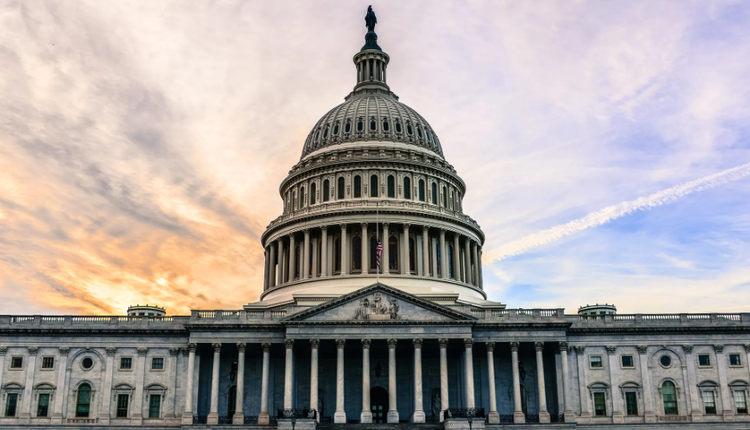
Washington D.C. (DC) – Stephanie Dock

D.C. is unique in that it functions as both a state and local government. While DDOT holds theoretical authority, the path to deployment remains unclear.

Waymo plans to begin operations in 2026, ahead of D.C.’s completion of its regulatory framework.

Distinct challenges:

  • High Visibility: Constant federal scrutiny and symbolic importance as the nation’s capital.
  • Security Concerns: Frequent special events, unannounced motorcades, and espionage concerns.
  • 29 overlapping law enforcement agencies operate within DC.
  • DC serves as the central city to a tri-state region (Maryland and Virginia), making a coherent regional regulation difficult.

Future Initiatives:

  • AV Monitoring Zone Pilot
  • A Deployment Report to offer recommendations for legislation .

Logistical Barrier: limited industrial land for AV depots and charging facilities risks pushing these operations into Maryland and Virginia, increasing “zombie miles” (empty VMT) traveling back into the city.


Common Challenges Across SF, Austin, and DC

1. Poor Data Access

Need for Basic Metrics: Cities struggle to access basic metrics needed for policymaking, such as number of AVs, Vehicle Miles Traveled (VMT), empty VMT (deadheading), vehicle occupancy, crash statistics, and demographic usage data.

This makes it impossible to normalize safety comparisons (AVs to humans) or track environmental, congestion or social impacts.

This is the irony: the AV technology is supposed to provide abundant data, enabling the modern smart transportation operating system. Yet cities face difficulties accessing the basic metrics.

2. Operational Safety and First Responder Challenges

AVs present practical and safety challenges concerning emergency scenarios.

  • The AVs cannot read human cues, such as hand signals from traffic controllers or police, leading to “ridiculous situations”.
  • AVs obstruct or poorly navigate emergency scenes, failing to pull over for lights and sirens, coming too close to a scene, or interfering with equipment (like driving over a charged fire hose in Austin).

The lack of standardized protocols across AV companies imposes heavy burdens on first responders and elevates safety risks.

3. Resource and Capacity Constraints

Managing AV deployment demands specialized staff and sustained funding—resources cities rarely have.

Cost Recovery: Training, monitoring, and infrastructure adjustments result in significant expenses.

Capacity: Even major cities like SF and DC struggle to maintain sufficient technical, policy, and legislative capacity to manage the evolving AV sector.

You can see the full video at MIT Mobility Forum 155.

Subscribe to the Newsletter

join my newsletter to understand what actually works, what’s not, and what might come next

[gravityform id="3" title="false" ajax="true"]

Share this Article on:

Related Articles